
PANJIT's Board of Directors resolved and approved, on January 26, 2024, the establishment of the“Sustainability Development Committee,” a functional committee under the Board of Directors. An ESG Project Office was also established as the execution unit responsible for sustainability-related matters.
The Sustainability Development Committee is convened by the chairman of the Board of Directors and all independent directors serve as the committee members. By more closely linking the corporate sustainable operations with board governance, we improve our sustainable development strategies and continue to promote sustainable governance culture for the creation of long-term corporate value.
The Sustainability Development Committee is responsible for setting and developing the Company's sustainability strategies, goals, and related management approaches, leading the sustainability team to propose and implement specific promotion plans, and continuing to deepen and implement the Company's sustainable development vision. The committee meets at least once a year, and reports to the Board of Directors on the implementation of ESG-related issues and sustainable information results. The Board of Directors makes suggestions for the implementation of the management approaches, strategies, and formulation of goals and supervises the implementation of measures.
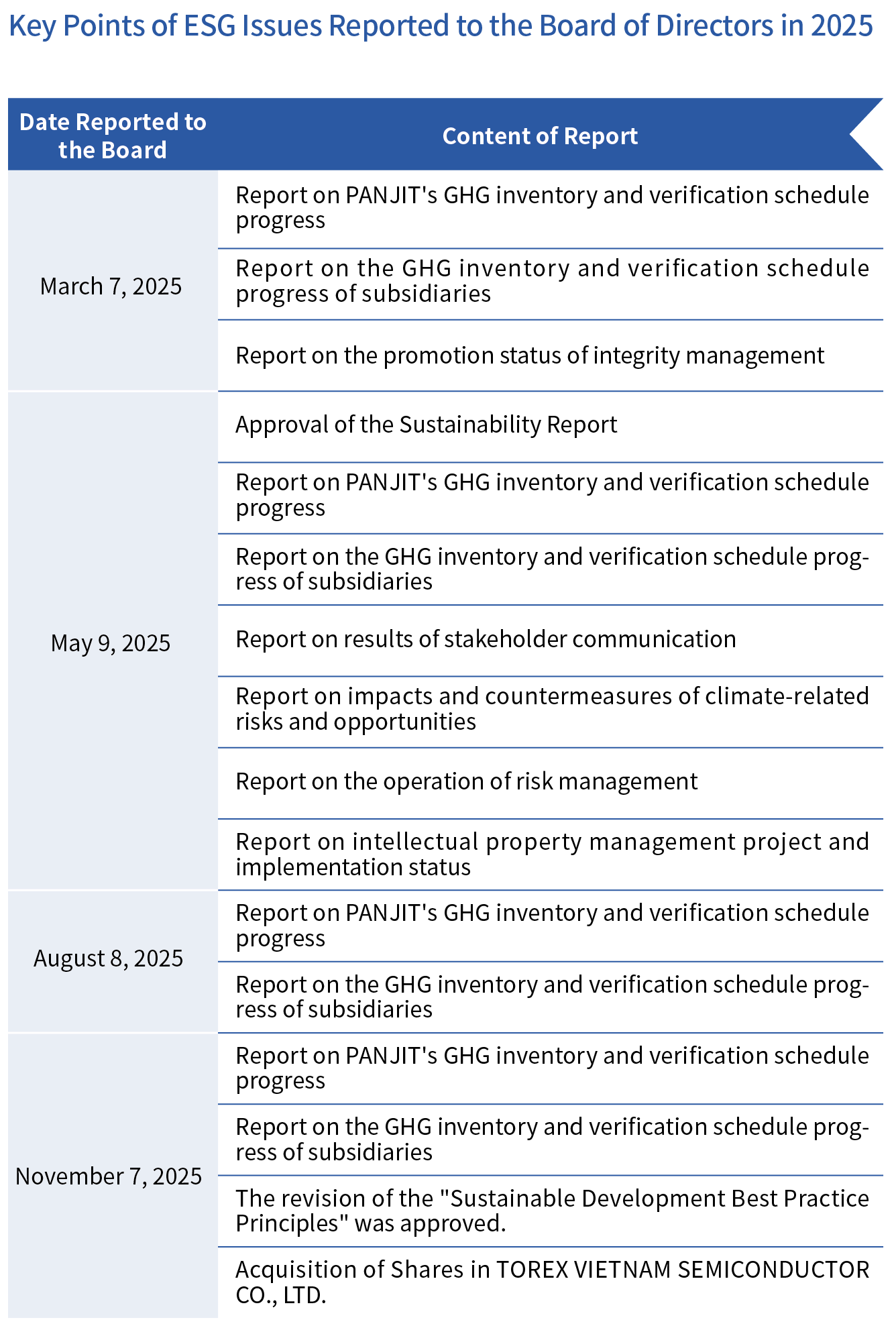
The Company identifies and selects key material matters required to be submitted to the Board of Directors in accordance with the rigorous mechanisms of the "Rules of Procedure for Board of Directors Meetings" and the "Hierarchical Authorization Method". We ensure that all matters involving significant financial impacts, regulatory compliance, environmental and social impacts, and the core interests of stakeholders are effectively incorporated into the decision-making and supervision processes of the highest governance body through a structured governance framework. In 2025, the Board of Directors discussed and reviewed a total of 43 proposals regarding key communication and oversight matters related to the company's operations, including: business strategy and operating results, financial resource planning and allocation,
major investments and overseas expansion, corporate governance, internal control and risk management, and compensation and performance management. Among them, three were sustainability-related issues: revision of the "Sustainable Development Best Practice Principles", review of the 2024 Sustainability Report, and acquisition of shares in TOREX VIETNAM SEMICONDUCTOR CO., LTD. For a complete list of matters
reviewed by the Board of Directors, please refer to “PANJIT International Inc. 2025 Annual Report” P.104-106.
In addition, PANJIT has established a regular communication mechanism whereby management periodically reports ESG implementation outcomes and key issues to the Board of Directors, ensuring that the highest governance body can promptly monitor the progress of sustainability transformation and fulfill its oversight responsibilities. In 2025, the sustainability topics reported to the Board at its four quarterly regular meetings included climate action and carbon reduction progress, stakeholder concerns and climate risk management, and integrity in operations and intangible asset protection, totaling 13 items.
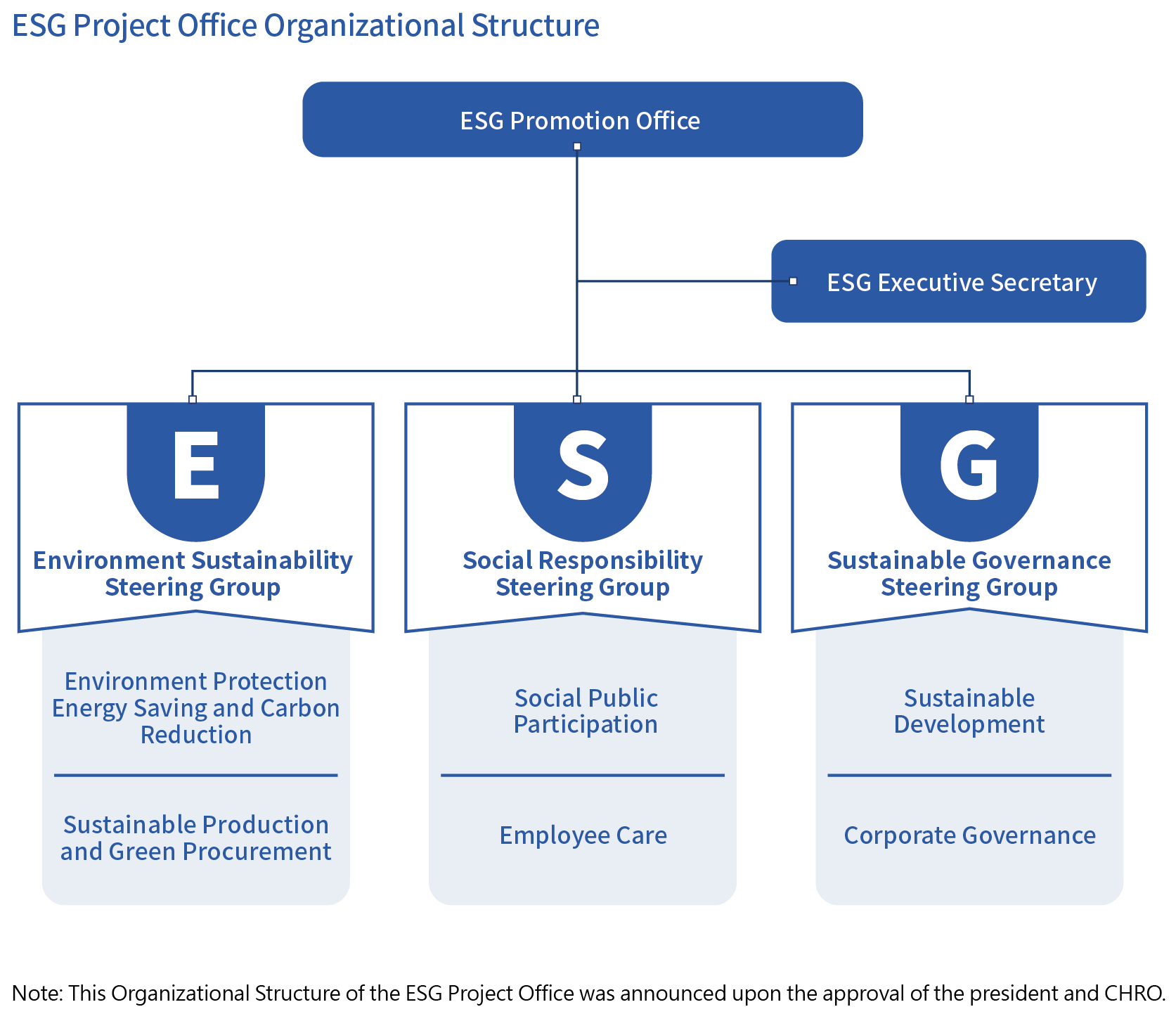
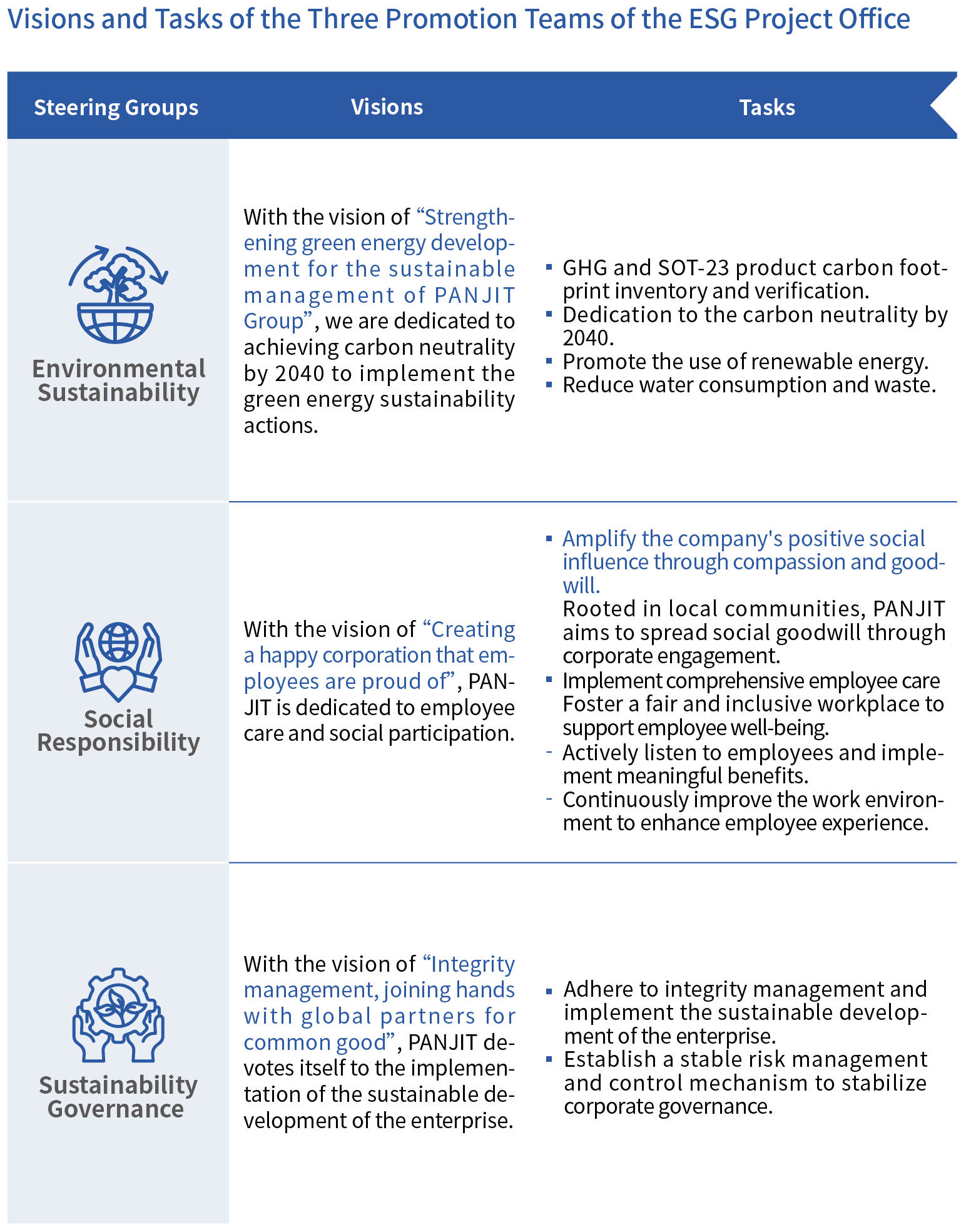
The president serves as the convener of the ESG Project Office, and under which are the Environment
Sustainability Steering Group, Social Responsibility Steering Group and Sustainable Governance Steering
Group that are in charge of the implementation of corporate sustainable development plans and the
resolutions of the Sustainability Development Committee. The Executive Secretary and the heads of each
team report the sustainable development results to the president at least once a year, and the president
will then summarize and report to the Sustainability Development Committee, which will then be reported to the Board of Directors on a yearly basis. We will continue to work for the achievement of ESG goals and implement ESG strategies and organize ESG development sustainably. The ESG Project Office framework and the sustainable operation responsibilities are as follows.
Stakeholder Communication
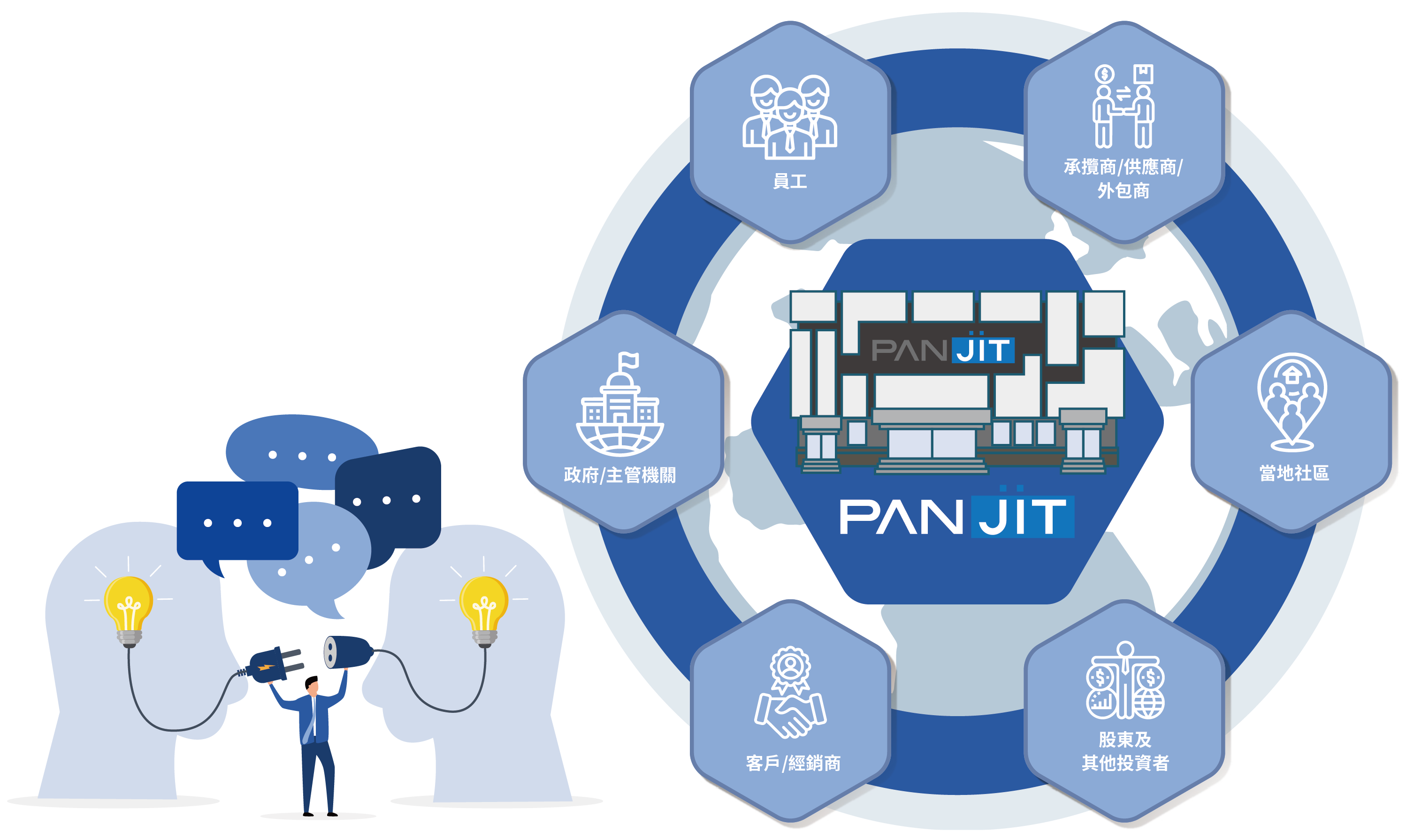
PANJIT Group adopted the AA1000 Stakeholder Engagement Standard (AA1000 SES) to conduct stakeholder identification and confirm the stakeholders' significance to PANJIT through five principles of Dependency, Responsibility, Tension, Influence, and
Diverse Perspective. ESG Project Office members had discussions in the meeting, and referred to the stakeholder identification results of the previous year and also considered the actual communication status of each unit to finally determine the major stakeholders. The stakeholders identified for 2025 include Employees, Government/
Competent Authorities, Customers/Distributors, Shareholders/Other Investors, Local Community, and Contractors/Suppliers/Outsourcers.
PANJIT Group continues the communication with its stakeholders through different channels and media to understand the stakeholders' expectations, and appropriately respond to their expectations to achieve the intended communication outcomes.
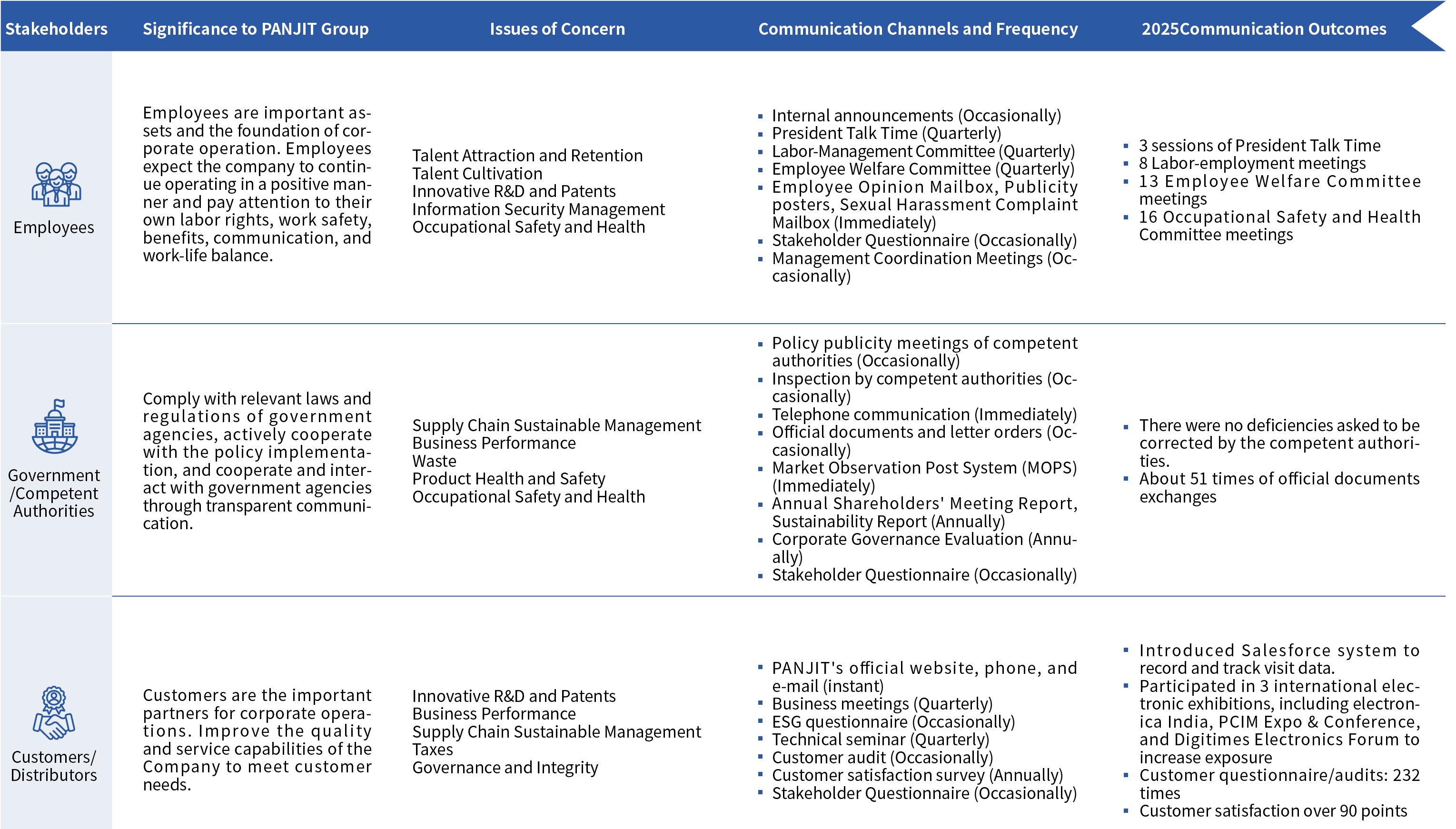
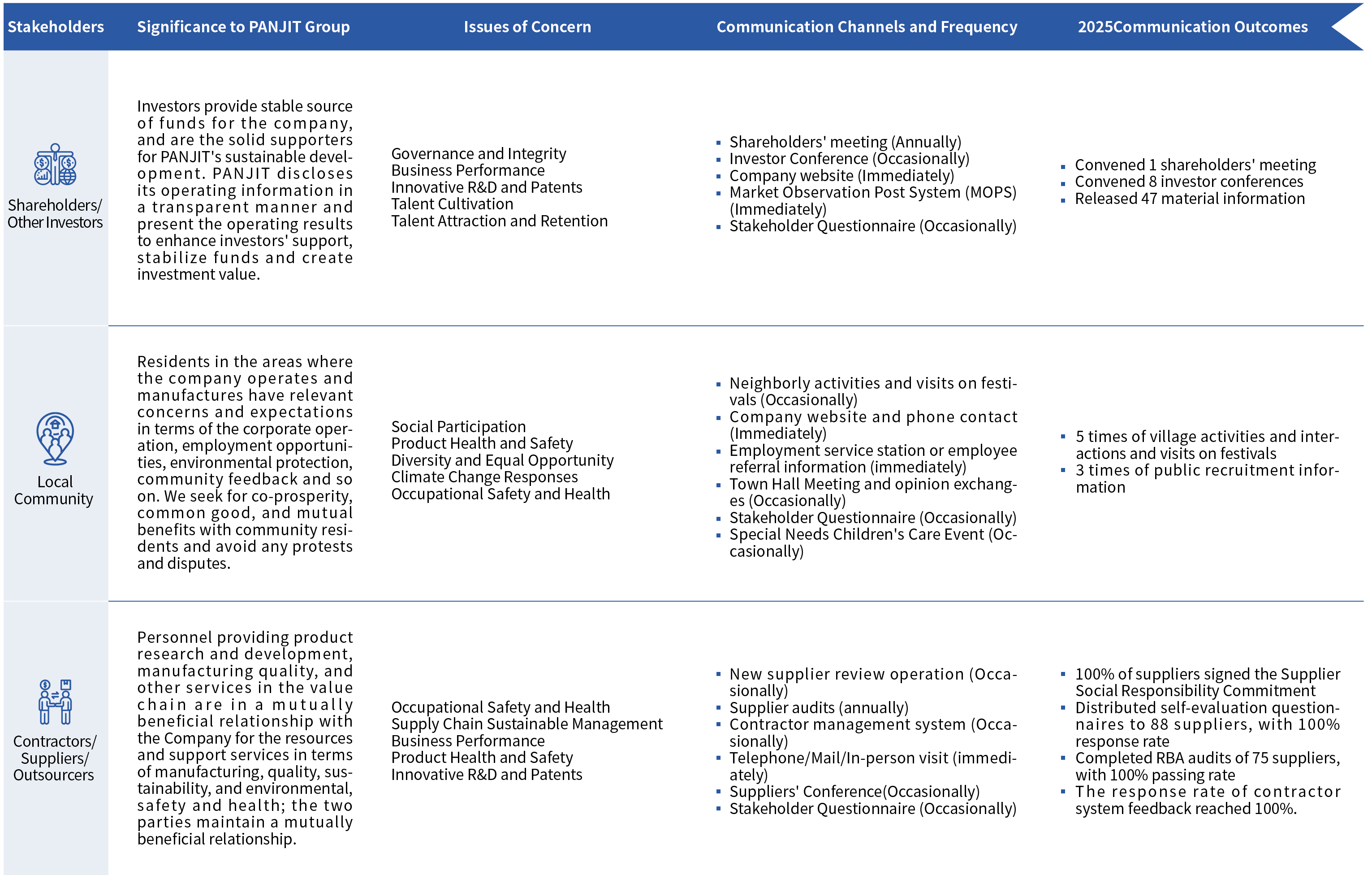
Stakeholder Communication Channels and Results

Stakeholder Communication Channels
Our stakeholders can continue to follow PANJIT's updates via social media and give us valuable opinions and suggestions.
Grievance and Reporting Channels
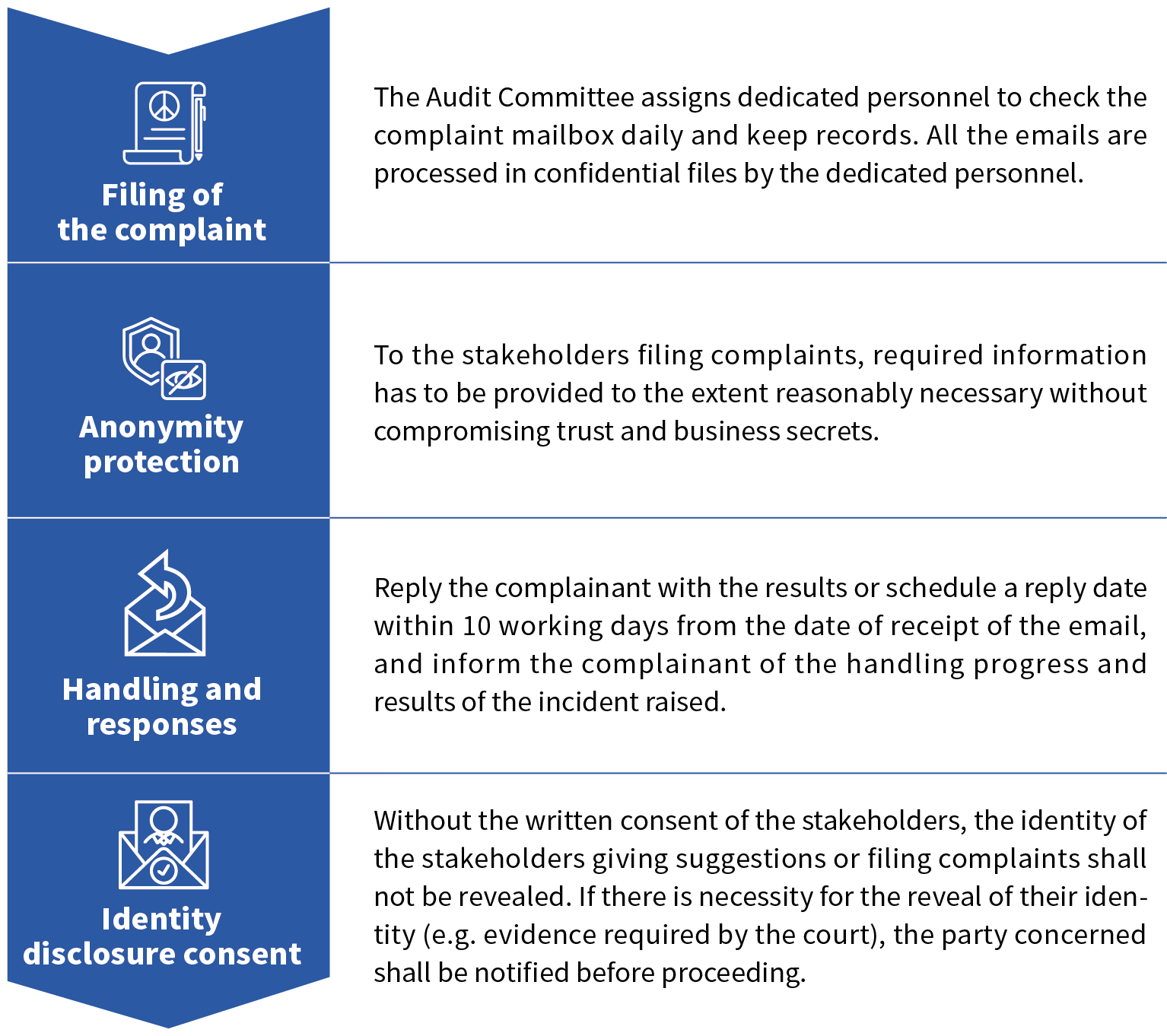
PANJIT Group values the rights and interests of stakeholders and has established a sound, fair, and transparent grievance mechanism. Through dedicated communication channels set up on the official website, stakeholders can anonymously submit suggestions or grievances regarding issues related to human rights, product quality, environmental protection, safety and health, information security, and corporate governance. All cases are assigned by the Audit Committee to dedicated personnel for acceptance and investigation, and strictly follow confidentiality principles to ensure that complainants and whistleblowers do not suffer any form of adverse treatment or retaliation for voicing their opinions.
In addition, each Operational site of PANJIT Group has clearly defined management
mechanisms for employee opinions and grievances, and has set up dedicated units responsible for accepting, tracking, and handling related cases, ensuring that employees can express their opinions and demands in a fair, transparent, and protected environment. In 2025, no employee suggestion or grievance cases were received by any of the Group's Operational sites.
Ethics and Integrity
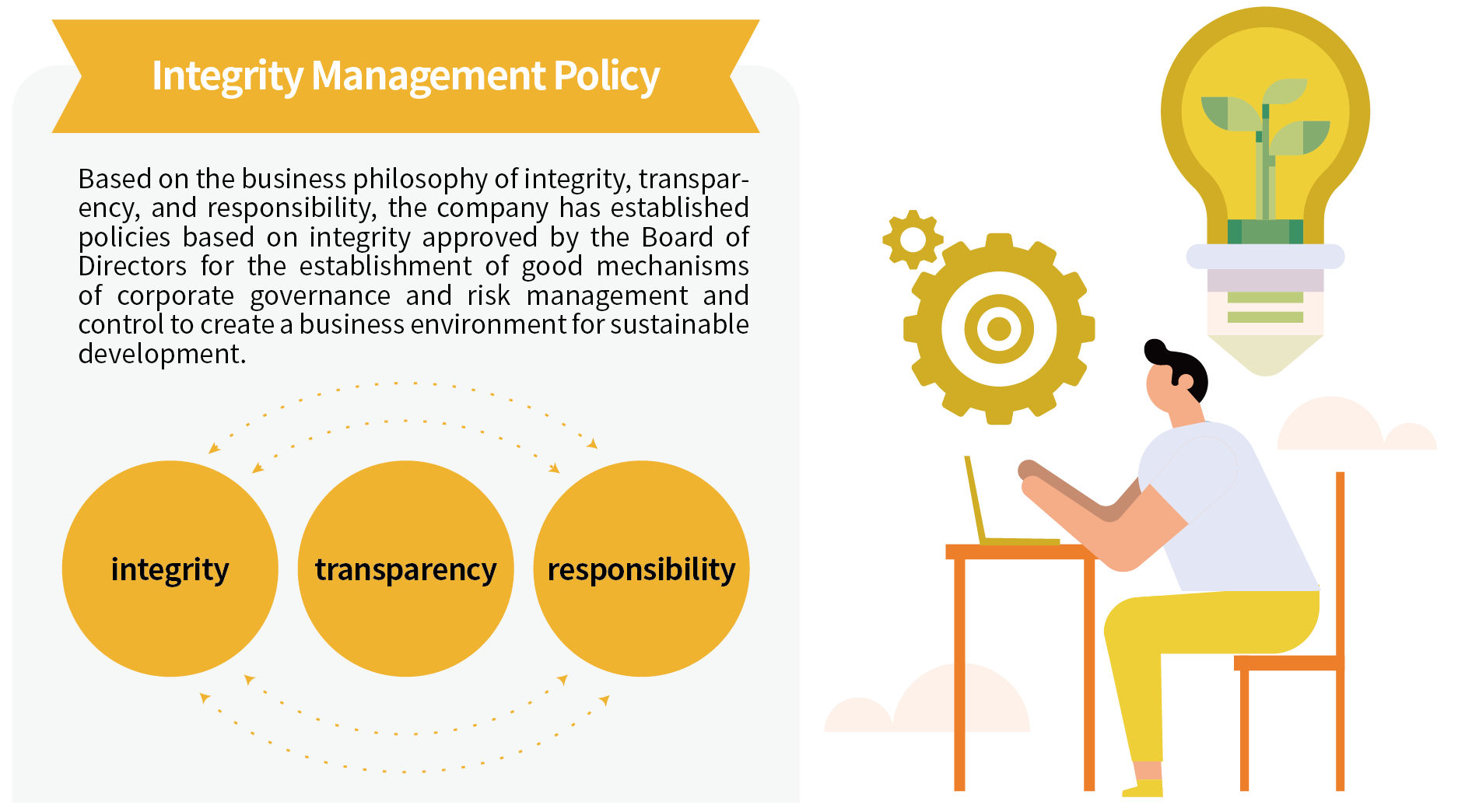
The core value of PANJIT is integrity management, and we have been committed to improving transparency and building a credible and responsible corporate image. We have formulated the Corporate Governance Best Practice Principles, Ethical Corporate Management Best Practice Principles, Procedures for Ethical Management and Guidelines for Conduct, and Codes of Ethical Conduct, established an internal control and supervision mechanism to actively prevent dishonest conduct. In addition, the Integrity Management Promotion Team was also established under the Board of Directors to report to the Board of Directors its integrity management policies, plans for dishonest conduct prevention, and the implementation of supervision at least once a year. All the directors of the Company are required to sign a Statement of Code of Ethics on the day they take office, which stipulates that the directors shall not engage in any dishonest, unlawful, or breach of fiduciary duty behavior during their official term.
The company has established an assessment mechanism for the risk of dishonest conduct. When preparing the annual audit plans, the level of impact of the risk of dishonest conduct is also included in the assessment items to make regular analysis and evaluation of the business activities with higher risks of dishonest conduct within the scope of business, and the annual audit operations are planned based on the risk assessment results. It is aimed to prevent conducts with potentially higher risks of dishonesty.
To implement integrity management, PANJIT Group not only evaluates the integrity records of its suppliers, but also requires these suppliers to sign a “Supplier Anti-corruption and Anti-bribery Commitment”. In addition, the clause on integrity and ethics has also been added to the contract terms, specifying the requirements for the adherence to integrity and compliance with ethics in business activities. Moreover, the company also requires personnel related to business activities with higher risks of dishonesty (such as sales representative and purchasing agent) to sign the Anti corruption and Anti-bribery Commitment, and publicity is also conducted through announcements, education and training as well as the bulletin boards to ensure the personnel abide by ethics and policies. Group also provides education and training on corporate social responsibility and integrity management to new employees in the orientation to demonstrate the company's determination in integrity management.
Furthermore, PANJIT has also established the Measures for the Management of Stakeholders' Suggestions and Complaints. A service contact for stakeholders' suggestions and complaints has also been set up on the company's official website as the grievance channel for stakeholders when their rights and interests are infringed. The handling status of the stakeholders' suggestions and complaints is also reported to the Audit Committee on a quarterly basis. Meanwhile, other internal reporting channels such as the contact, physical mailbox, and email boxes have been set up in accordance with the Ethical Management Procedures to maintain the rights and interests of the stakeholders and the company. All the reported incidents are handled, investigated and recorded by a dedicated unit based on the principle of confidentiality. When the incident is found true after investigation, measures and legal actions including the termination of the business relationship or employment contracts would be implemented based on the severity of the case and in accordance with the Work Rules.
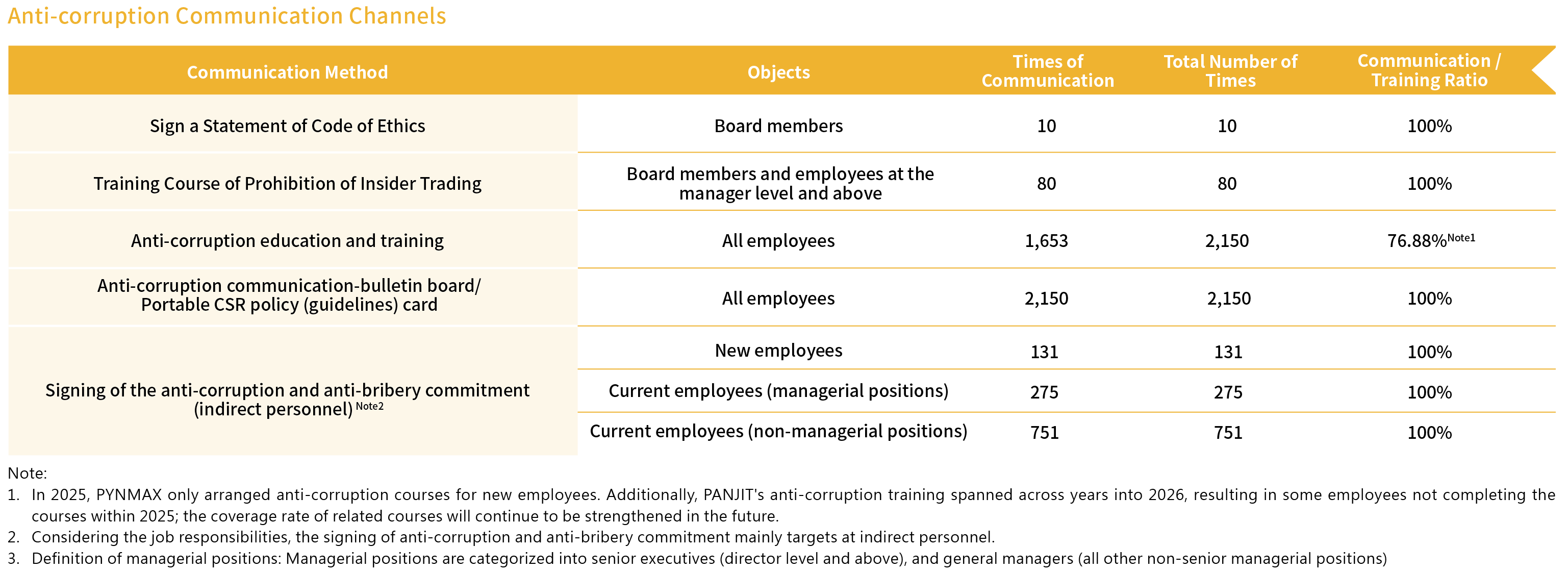
In 2025, the company did not have any relevant corruption incidents, made no political contributions, and was not involved in any legal incidents or litigations involving anti-competitive behavior, antitrust, and monopolistic behavior. The anti-corruption communication channels and outcomes for 2025 are shown in the table below:
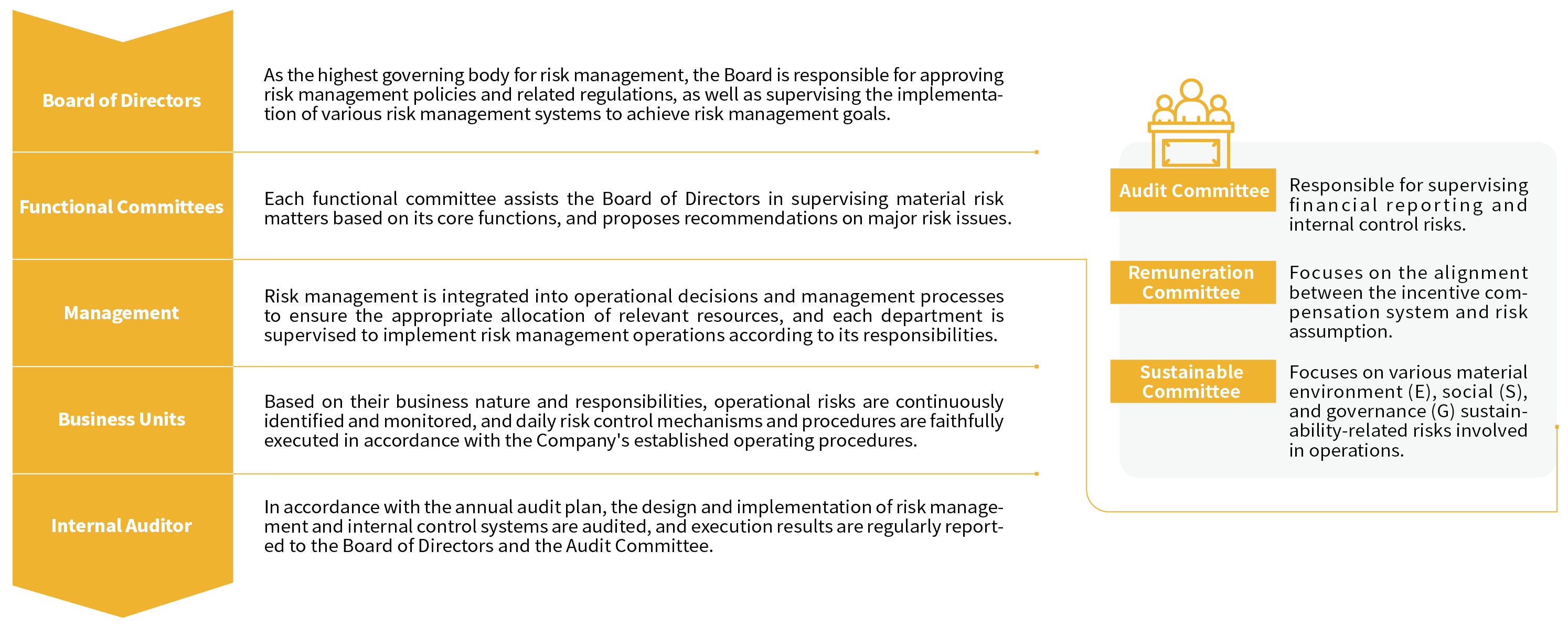
Risk Management Organizational Structure
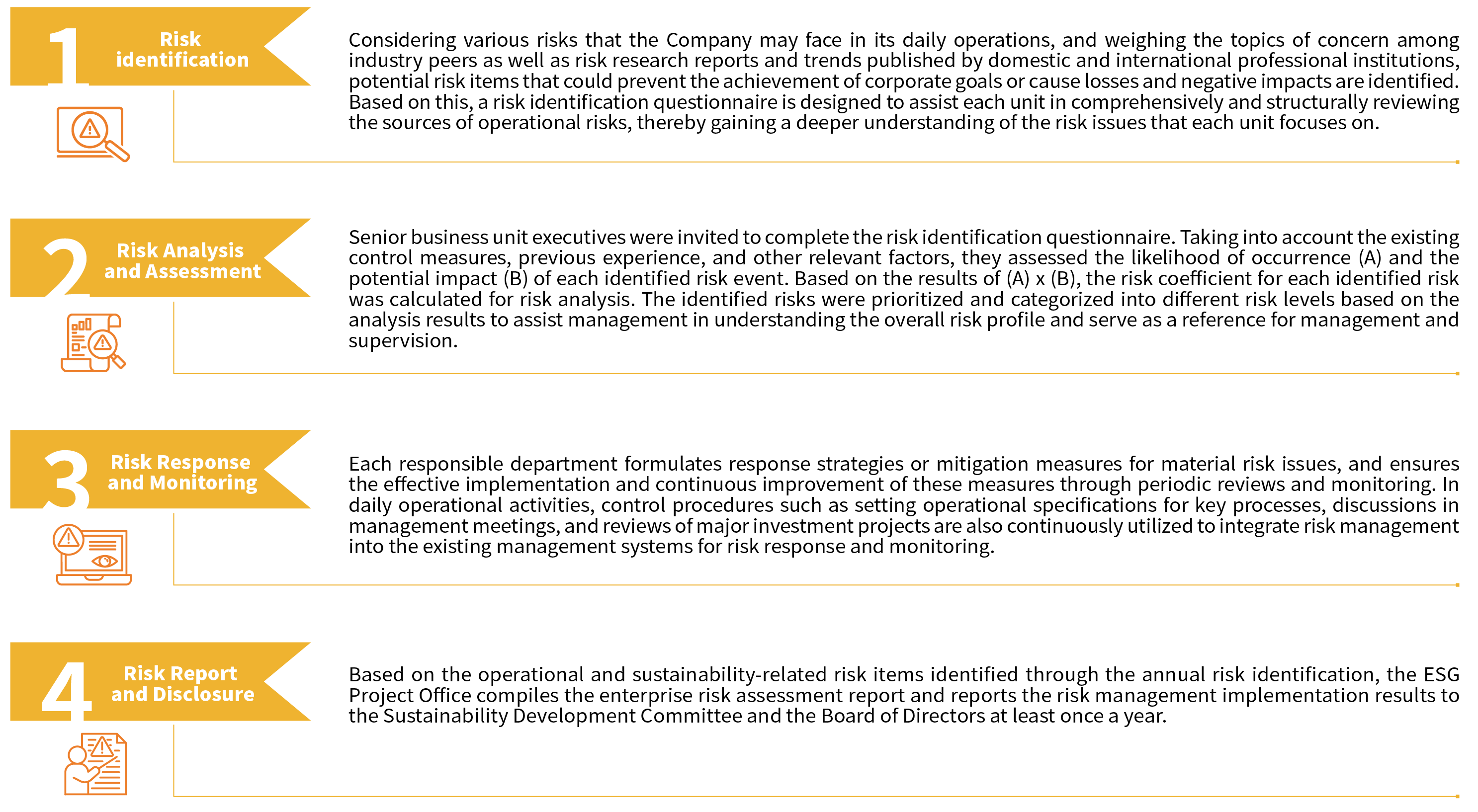
Risk Management Procedures
PANJIT's ESG Project Office coordinates risk identification operations, aggregates enterprise risk reports, and submits them to the Sustainability Development Committee and the Board of Directors.
Risk Management Implementation Status
In December 2025, the ESG Project Office conducted a risk identification process, identifying 18 risk items, which included 8 operational risks, 7 strategic risks, and 3 financial risks. To assess these risks, questionnaires were distributed to senior executives of each operational unit to evaluate each risk event based on its likelihood of occurrence (scored from 1 to 5, from low to high) and level of impact (scored from 1 to 5, from low to high). The risk coefficient for each risk item was then calculated based on the results of the completed questionnaires.
The results of this risk identification were all medium risks, with no material risk items. The ESG Project Office has compiled the enterprise risk management report and reported the risk management implementation status to the Sustainability Development Committee and the Board of Directors on May 8, 2026.
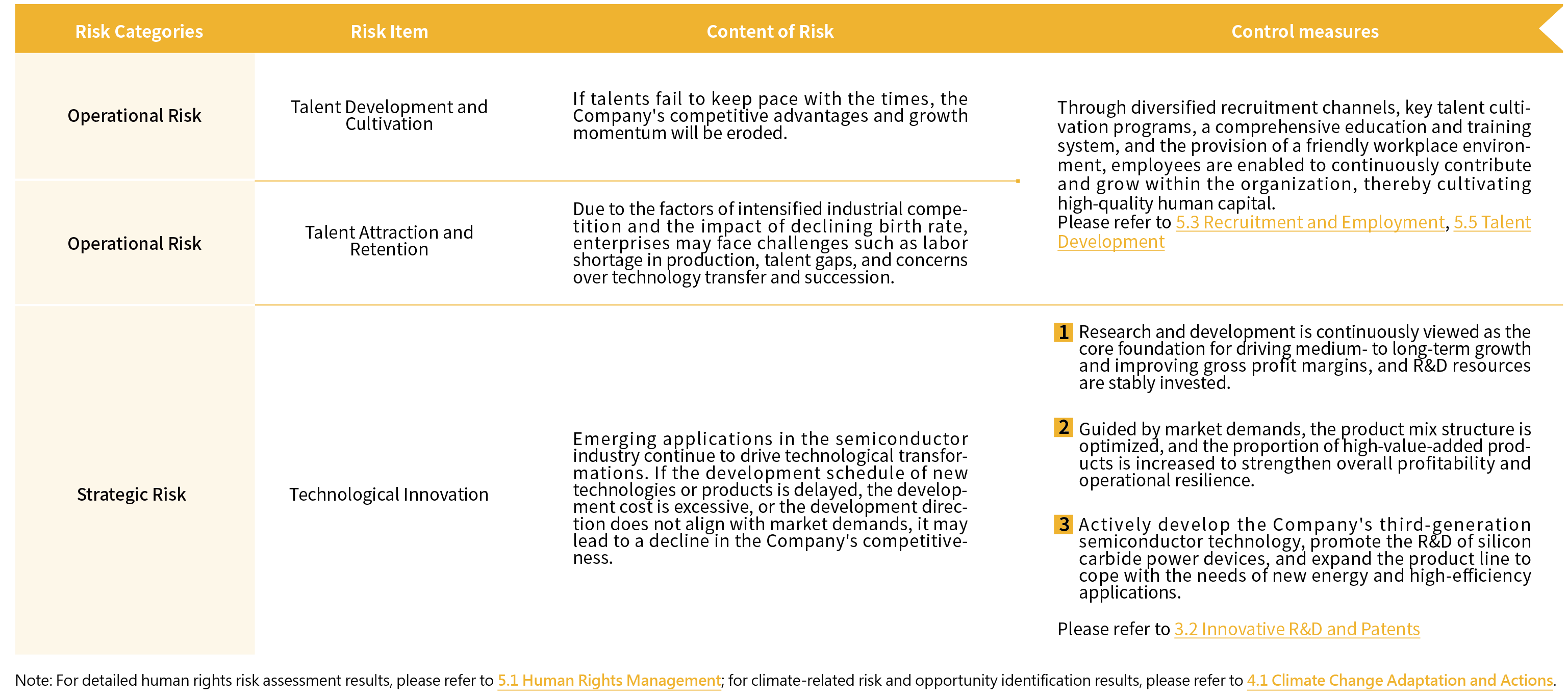
The top three risk items from this risk identification are Talent Development and Cultivation, Talent Attraction and Retention, and Technological Innovation. A summary of their key control measures is as follows: